Green Solvents for Analytical Chemistry: The Ranking that Doesn't Exist The previous post in this series was about removing the solvent entirely. Solid-phase microextraction needs no extraction solvent at all, and that absence is the appeal. It seems to end an argument before it starts: if the solvent is the problem, the greenest choice is none. But most methods
Featured The other tire contaminants: benzothiazoles, water treatment, and the hidden chemistry of road runoff Two posts ago, the story was 6PPD-quinone: a tire antioxidant that converts into a compound lethal to coho salmon at parts-per-trillion concentrations, discovered because people happened to be watching a fish kill on a Seattle-area creek[1]. It deserved the headlines, but it also distorted the
Solid-Phase Microextraction: The Theory Behind a Small but Powerful Sampling Tool Sample preparation is often the least glamorous part of an analytical workflow, yet it can determine whether an analysis succeeds or fails. Before an analyte reaches a gas chromatograph, liquid chromatograph, or mass spectrometer, it may need to be isolated from interfering compounds, concentrated to a detectable level, and transferred
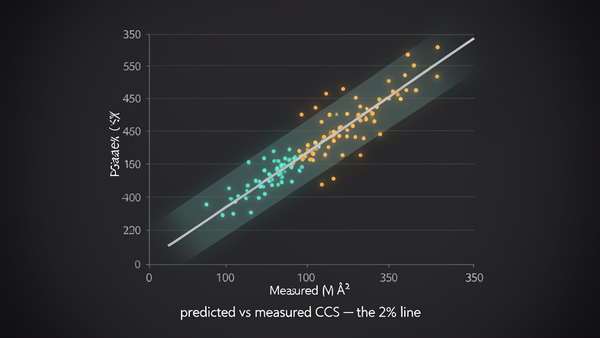
Predicting CCS for compounds we have never measured The previous post ended with a question. We had 247 halogenated features in a single LC-HRMS injection of a real chlorinated surface water. Twelve matched a public database. The other 235, most of them the kinds of disinfection byproducts that water utilities have never been required monitor, sat without
The 70% problem: what chlorine makes in our drinking water that we cannot identify Your water utility publishes a Consumer Confidence Report every year. It tells you the four regulated trihalomethanes were below 80 µg/L, the five regulated haloacetic acids were below 60 µg/L, and that the water is "safe." Every year, the same reassuring numbers. The case is closed.
Isomers that poison: when same mass, different shape, different toxicity In the previous post I described about how chlorination of 6PPD-quinone generates twelve transformation products (TPs), eleven of them chlorinated (Jiao et al., 2026). Eleven chlorinated TPs are not all the same molecule with one chlorine stuck on. They are mostly positional isomers — the chlorine atom is at a
6PPD-quinone: how a tire antioxidant became a salmon killer, and how scientists actually find it The salmon mystery For scientists studying the life cycle of US Pacific Northwest coho salmon (Oncorhynchus kisutch), one problem has been bothering the scientists: they observed that coho salmon usually dies in streams near human activities hours after exposure to rainstorms with no explanation. This is a big issue considering
Featured What is a Collision Cross Section (CCS), and why should environmental chemists care? Every environmental chemists are familiar with sugar-cube-in-Olympic-pool analogy, which generally goes this way: if we dissolve a sugar cube in an Olympic-size pool, the concentration of sugar comes down to 1.6 ppb (ug/L). For sensitive instruments the like of typical LC-MS or